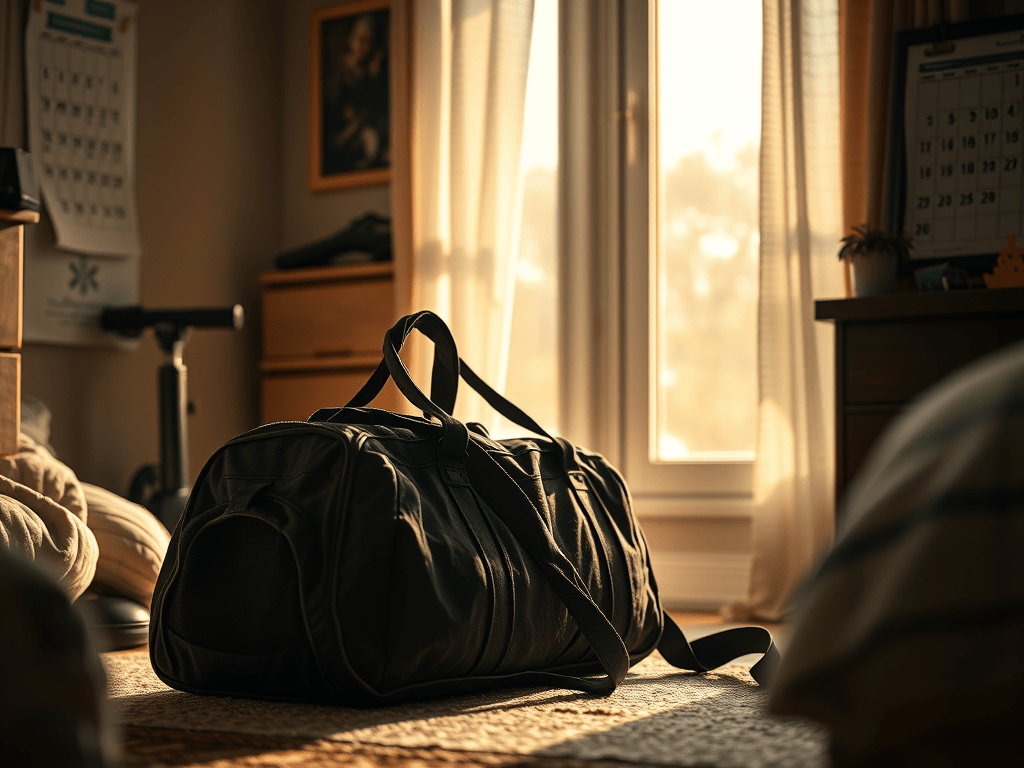
I stared at my gym bag gathering dust in the corner of my bedroom. Again.
Third time this week I’d packed it the night before with good intentions, only to find some excuse not to grab it on my way out. The monthly membership fee would hit my account tomorrow – another $60 down the drain for a place I’d visited exactly twice in February.
God, I was tired of this cycle.
They say the definition of insanity is doing the same thing repeatedly and expecting different results. By that measure, my approach to fitness qualified as certifiably nuts. For ten years I’d been caught in the same pattern: bursts of gym-going enthusiasm followed by weeks of nothing, promises to “start again Monday” that faded by Tuesday afternoon, and a growing sense that maybe I just wasn’t cut out for this whole fitness thing.
What finally changed wasn’t finding some magical workout plan or motivation technique. It was something much simpler: I stopped treating movement as something I occasionally did and started viewing it as something I lived.
This is my messy, imperfect story of how that shift happened.
REVOLUTIONARY WEIGHT LOSS FIND!🔥 Unleash your body’s natural fat-burning potential with a secret celebrities have hidden for years! 💪


The Hiking Disaster
Last April, our company organized a team-building retreat in the mountains. The main activity? A “moderate” hike that our HR director assured everyone would be “totally manageable for all fitness levels.”
Yeah, right.
Twenty minutes in, I was already struggling. While my coworkers chatted easily as they climbed, I was fighting for each breath, my face burning with exertion and embarrassment. When we reached a small clearing, I pretended to be fascinated by a nearby plant while desperately trying to slow my breathing.
“You hanging in there, Mike?” called Sarah, my boss, glancing back with poorly disguised concern.
“Just… enjoying the… view,” I wheezed, hoping my smile didn’t look as pathetic as it felt.
At 35, I shouldn’t have been struggling that much. I went to the gym sometimes – okay, occasionally – but clearly those sporadic elliptical sessions weren’t translating to actual, functional fitness.
That night, nursing sore muscles and wounded pride in my hotel room, I fell down an internet rabbit hole. Searching “how often should you exercise to not be pathetically out of shape” led me to articles about something called “lifestyle moving” – the concept that consistent activity woven throughout daily life often produced better long-term results than occasional intense workouts.
One researcher put it bluntly: “The continuous nature of the physical fitness concept means you can’t store it up on weekends and expect it to last through a sedentary week.”
That hit home. Hard.
Breaking Up With the Gym (Sort Of)
Back home, I kept thinking about this idea. I’d always approached fitness as something separate from “real life” – a special activity requiring special clothes, equipment, and chunks of time I never seemed to have enough of.
What if that was the problem?
I decided to try something different. Instead of asking myself “should I drag my ass to the gym today?” (the answer was usually no), I started asking “how can I move more today, regardless of whether I make it to the gym?”
This shift felt stupidly simple, but it changed everything.
I bought a cheap pedometer – nothing fancy, just something to track basic movement. First day wearing it, I clocked a pathetic 2,851 steps. Apparently my desk-to-car-to-couch lifestyle wasn’t doing me any favors.
The next day, I deliberately parked at the far end of the office lot. Took the stairs instead of the elevator. Walked around the block during my lunch break. Paced my kitchen while on a call with my mom. Small stuff, nothing that felt like capital-E “Exercise.”
End of day count: 6,278.
Still below the recommended 10,000 steps, but more than double my previous day. And here’s the weird part – I felt… good. Not exhausted, not sore, just pleasantly tired in a way that helped me sleep better that night.
I started looking for more opportunities to move. Walking to the corner store instead of driving. Taking the long way to the bathroom at work. Standing up during Zoom calls. Getting off the bus one stop early.
After about three weeks of this, my coworker Tina cornered me in the break room.
“Okay, what gives?” she demanded. “You’re like, weirdly energetic lately. New relationship? Drugs? Secretly drinking the good coffee you hide from the rest of us?”
I laughed and told her about my new approach.
“So wait,” she said, stirring her sad office coffee. “You’re still going to the gym, but not beating yourself up if you don’t make it because you’re moving throughout the day anyway?”
“Exactly,” I said. “Overall you need to take responsibility for your physical fitness, but maybe the gym isn’t the only way to do that.”
She looked thoughtful. “Huh. That actually sounds doable.”

Finding What Works (And Doesn’t)
I didn’t abandon the gym entirely. Instead, I tried to be realistic about how often I’d actually go – twice a week seemed sustainable – and focused on exercises beginning with e… er, I mean, activities I genuinely enjoyed rather than what I thought I “should” be doing.
Turned out, I actually liked strength training. Hated running with the fire of a thousand suns. Enjoyed the rowing machine. Could tolerate the elliptical while watching a good show.
I learned that weight-bearing activities are what type of exercise contributes most to building strong bones, so I focused on those during my gym sessions. But equally important were the movement habits I built into everyday life:
- Morning stretching while waiting for my coffee to brew
- Walking phone calls (works for some calls, not high-pressure work ones)
- Parking farther away from entrances everywhere I went
- Taking the long way to the bathroom at work (bonus: avoiding my annoying cubicle neighbor)
- Weekend activities focused on movement: washing the car manually, gardening, volunteer park cleanup
Some attempts failed spectacularly. My brief experiment with jogging in the morning lasted exactly three sessions before I remembered how much I hate mornings, jogging, and especially the combination of the two. The fancy standing desk converter I ordered ended up holding my reference books after the novelty wore off.
Trial and error taught me what worked for my life, my body, and my admittedly inconsistent motivation levels.
Which statement is true about regular exercise? It’s not that you need heroic consistency, but rather that imperfect consistency beats occasional perfection every time.

Head Games
I’ve always struggled with moderate stress level – 中文 (that’s pinyin for “moderate stress level” – I was trying to learn Mandarin during this period too, another story entirely and another thing I was inconsistently committed to…).
About two months into my lifestyle shift, something unexpected happened. During a particularly hellish workweek, I found myself instinctively taking walk breaks when anxiety peaked. Not because I was trying to “get my steps in,” but because it genuinely helped clear my head.
My therapist – yes, I have one, no, I don’t go as regularly as I should – noticed the change before I fully articulated it myself.
“You seem more… grounded lately,” she said during one session. “Less trapped in your thought loops.”
I told her about my movement experiments.
“That makes perfect sense,” she nodded. “We know movement helps process emotional energy. You’re giving yourself a physical outlet for stress instead of just recycling it through your brain.”
This benefit alone would have been worth the effort, but I noticed other subtle improvements too. Better sleep. Fewer mid-afternoon energy crashes. Even my perpetual back pain (thanks, desk job) had decreased.
When did physicality become a word in my vocabulary? Probably around this time, when I started recognizing how disconnected I’d become from my physical existence while living primarily in my head.
Changing My Environment
As months passed, I realized how much my surroundings either supported or sabotaged movement. My apartment was arranged for maximum convenience and minimum effort – not necessarily a bad thing, but definitely not helping my cause.
I started making small adjustments:
- Put the TV remote across the room so I had to get up to change channels
- Stored commonly used items slightly out of reach so I’d have to stretch
- Kept comfortable shoes by the door as a visual reminder to take a quick walk
- Rearranged my home office to allow for standing periods
- Bought a used treadmill from Craigslist and put it where I could watch TV while walking slowly
These environmental tweaks removed many of the tiny barriers that had previously prevented movement. I discovered that exercises that start with o – like overhead presses and outdoor walking – could be naturally integrated into my day without much extra effort.
I also became more aware of safety considerations. When exercising you have little influence over your personal safety if your environment is hostile to movement – a lesson I learned the hard way trying to take evening walks in my poorly-lit neighborhood. I adjusted my walking times and routes accordingly.
The Work Crisis Test
Six months into my new approach, disaster struck at work. A major project I’d led fell apart spectacularly, and for a terrible week, it looked like I might lose my job.
In the past, this kind of stress would have sent me straight to the couch with comfort food and Netflix. Exercise would have been the first thing sacrificed in the name of “not having enough time” or “being too stressed.”
This time was different. Not because I suddenly developed superhuman willpower, but because movement had become my stress relief rather than another obligation. Walking helped me process the situation. Strength training gave me a sense of control when work felt chaotic. Even simple stretching breaks helped prevent the tension headaches that usually plagued me during difficult periods.
I survived the work crisis (and kept my job, thankfully). More importantly, I maintained my movement habits through it – not perfectly, but enough to help rather than hinder my stress management.
This was when I truly understood that fitness isn’t just about physical health.
The Social Experiment
Around the eight-month mark, I realized most of my movement was solitary. Nothing wrong with that, but as an extrovert who draws energy from people, I wondered if adding a social component might make movement even more sustainable.
I tried a few group fitness classes. Most weren’t my thing – too intense, too complicated, or filled with people who seemed to already know each other. But a weekend hiking group I found through a local outdoor store felt right immediately.
Most participants were older than me – many in their 50s and 60s – but they welcomed me warmly. On my second outing, I chatted with Larry, a 67-year-old retired teacher who moved with the ease of someone decades younger.
“What’s your secret?” I asked him during a water break, only half-joking.
“No big secret,” he shrugged. “Just never stopped moving. Found things I enjoyed and kept doing them. Adapted when I needed to.”
The group had information about exercise classes for 50 and over near me that many members attended during winter months when hiking was less accessible. Their approach to fitness was refreshingly straightforward – move regularly, enjoy it when possible, don’t make it complicated.
Through these social connections, I began to see how the factors that affect muscular endurance and overall fitness are multifaceted – not just what you do in the gym, but how you live daily, what you eat, how you rest, and even who you spend time with.
Two Years Later
It’s been two years since my humiliating hiking experience kickstarted this journey. What’s changed?
Physically, I’m different – stronger, more energetic, about 15 pounds lighter (though my weight still fluctuates because I’m human and sometimes eat my feelings). But the most profound change is in my relationship with movement itself.
I no longer agonize over whether I’m exercising “enough” or doing it “right.” Movement is just part of how I live now – sometimes more, sometimes less, but always present in some form.
Some days that means a challenging workout at the gym. Other days it’s a long walk with a friend or an hour pulling weeds in my small garden. During busy periods, it might just be conscious efforts to take the stairs, park farther away, or do a few stretches between meetings.
Which of the following is not a short-term fitness goal? Creating a sustainable lifestyle that supports wellbeing across all dimensions. That’s what I’ve been working toward – not a finish line to cross, but a path to walk for the rest of my life.
If you’re stuck in the on-again-off-again exercise cycle I lived in for so long, consider shifting your focus from isolated workouts to integrated movement. Here’s what I’ve learned:
- Consistency beats intensity. Regular, moderate movement yields better results than occasional intense efforts.
- All movement counts. Seriously. All of it.
- Your environment matters. Set things up to make movement easier, not harder.
- Find what works for YOUR life, not someone else’s #fitspo Instagram version.
- Perfection is bullshit. Aim for “more often than not” instead.
The path to active living isn’t about dramatic transformations or heroic efforts. It’s about small, imperfect choices made more days than not, gradually reshaping your relationship with movement until it becomes as natural as breathing – an essential part of being alive in your body every single day.
Sometimes I still don’t want to move. Sometimes Netflix wins. Sometimes work deadlines or family obligations take priority. I’m still working on finding the right balance – trying for 5 out of 7 days with significant movement while forgiving myself for the other 2.
But I no longer question whether movement belongs in my life. That would be like questioning whether I should keep breathing.
The answer, of course, is yes. Always yes.
WANT TO DISSOLVE STUBBORN BELLY FAT QUICKLY? 🔥Here’s your ultimate trick! Stir this tasteless powder into your morning coffee and see the amazing results! 💪








 Fat-Burning Fitness Tips for Sustainable Results
Leave a comment