
When it comes to weight management, finding effective, sustainable solutions can feel like searching for a needle in a haystack. As someone who’s been treating patients with metabolic disorders for over 15 years, I’ve witnessed firsthand the struggles many face with conventional weight loss approaches. Recently, a medication called low dose naltrexone (LDN) has garnered attention for potential weight loss benefits, despite being primarily used for other conditions. But does the evidence support these claims, or is this another case of misplaced hope? Let’s dive into what we actually know.
What is Low Dose Naltrexone and How Does it Work?
Naltrexone was originally approved by the FDA at standard doses (50-100mg) to treat opioid and alcohol dependence. Low dose naltrexone refers to daily doses of naltrexone that are significantly lower than standard therapeutic doses—typically between 1.5 and 4.5 milligrams.
At these lower doses, naltrexone appears to work through different mechanisms than at standard doses. Rather than completely blocking opioid receptors, LDN temporarily blocks endorphin receptors for a short period. This brief blockade is believed to trigger the body to produce more endorphins and enkephalins (natural opioids) and upregulate opioid receptors. This process is called “opioid rebound” or “endorphin rebound.”
Additionally, LDN may reduce inflammation through its effects on microglial cells in the central nervous system. These immune cells, when activated, can produce inflammatory compounds. By modulating these cells, LDN might help reduce inflammatory processes throughout the body.
But how might these mechanisms relate to weight loss? That’s where things get interesting—and complicated.
REVOLUTIONARY WEIGHT LOSS FIND!🔥 Unleash your body’s natural fat-burning potential with a secret celebrities have hidden for years! 💪

The Scientific Evidence Behind Low Dose Naltrexone Weight Loss
Let me be perfectly straight with you—the direct evidence for LDN as a standalone weight loss treatment is limited. Most of the research on naltrexone for weight management involves higher doses and combination with other medications.
The most well-studied combination is naltrexone-bupropion (marketed as Contrave), which uses 32mg of naltrexone combined with 360mg of bupropion daily. This FDA-approved weight loss medication works on both opioid receptors and dopamine/norepinephrine pathways to reduce appetite and address food cravings.
A 2021 review published in the International Journal of Obesity analyzed data from four 56-week clinical trials and found that participants taking naltrexone-bupropion lost approximately 5% more body weight than those taking placebo. Not insignificant, but certainly not miraculous either.
As for LDN specifically, here’s what we know:
- Inflammatory Pathways: Chronic inflammation is increasingly recognized as a factor in obesity. If LDN does indeed reduce systemic inflammation, this might indirectly support weight management efforts.
- Metabolic Effects: Some small studies suggest LDN may improve insulin sensitivity, which could theoretically help with weight regulation, especially in those with insulin resistance.
- Autoimmune Connections: There’s emerging evidence that LDN may benefit certain autoimmune conditions, some of which can affect metabolism and weight regulation.
- Mood Regulation: By increasing endorphin levels, LDN might help regulate mood, potentially reducing emotional eating in some individuals.
I recently spoke with Dr. Elizabeth Torres, an obesity medicine specialist who has prescribed LDN off-label to selected patients. “What we’re seeing isn’t dramatic weight loss like with GLP-1 agonists,” she told me, “but some patients report modest weight loss, particularly those with suspected inflammatory or autoimmune components to their weight struggles.”
However, she emphasized that these observations are anecdotal and not backed by large-scale clinical trials for LDN specifically at low doses for weight loss purposes.
Real Patient Experiences: Mixed Results
When examining the real-world impact of LDN on weight, patient experiences vary considerably. Jane Thompson, a 42-year-old teacher who began taking LDN for fibromyalgia symptoms, noticed unexpected weight loss after three months.
“I’d struggled with my weight for years following my autoimmune diagnosis,” she shared. “After starting LDN at 3mg daily, I lost about 15 pounds over six months without changing much else. But I think it was because I felt better overall and could be more active, not because LDN directly caused weight loss.”
Contrast this with Mark Daniels, 38, who tried LDN specifically for weight loss after reading about it online: “I took it for four months and didn’t lose a single pound. My doctor said it was worth trying given my inflammatory markers were high, but it just didn’t work for me weight-wise.”
These divergent experiences reflect what many clinicians observe—responses to LDN vary widely, and weight loss, when it occurs, is generally modest and may be secondary to improvements in other conditions that previously hampered weight management efforts.
Comparing LDN to Established Weight Loss Treatments
To provide context, it’s worth comparing what we know about LDN to established weight loss treatments:
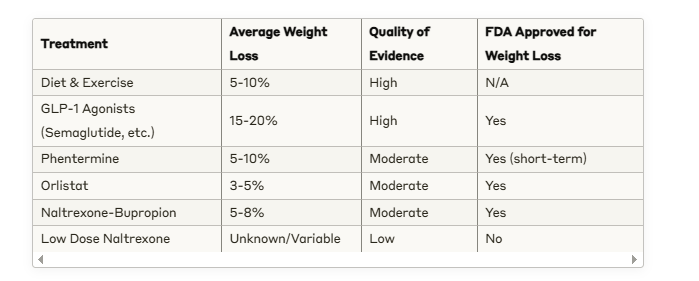
As you can see, LDN stands apart as having the least established evidence base specifically for weight management. This doesn’t mean it’s ineffective—rather, it means we simply don’t have enough high-quality data to make strong claims about its weight loss benefits.
Potential Side Effects and Safety Considerations
LDN is generally considered to have a favorable safety profile compared to standard-dose naltrexone, but it’s not without potential side effects. Common reported side effects include:
- Vivid dreams or sleep disturbances (especially when taken at night)
- Headache
- Nausea or digestive upset
- Temporary fatigue
- Anxiety or irritability
Most of these effects tend to resolve within the first few weeks of treatment. However, there are important contraindications to consider:
- LDN should not be taken by individuals currently using opioid medications, as it can precipitate withdrawal
- Those with liver disease should use caution and have liver function monitored
- Patients with thyroid disorders should have their thyroid function closely monitored, as LDN may affect thyroid hormone levels
Dr. Michael Friedman, a hepatologist I consulted for this article, cautions: “While the low dose makes naltrexone much less likely to cause liver issues than the standard dose, I still recommend baseline liver function tests and periodic monitoring, especially in patients with pre-existing liver concerns.”
Who Might Benefit from LDN for Weight Management?
Based on current understanding, LDN might be most worth considering for individuals who:
- Have inflammatory or autoimmune conditions along with weight management challenges
- Haven’t responded well to conventional weight loss approaches
- Have evidence of chronic inflammation (elevated inflammatory markers)
- Experience food addiction-like behaviors or strong cravings
- Cannot tolerate or have contraindications to FDA-approved weight loss medications
Dr. Rebecca Liu, an integrative medicine physician who sometimes prescribes LDN, suggests: “I find LDN most helpful for patients at the intersection of inflammation, pain, mood disorders, and weight issues. It’s rarely my first-line recommendation specifically for weight loss, but more as part of a comprehensive approach for complex patients.”
Integrating LDN into a Comprehensive Weight Management Plan
If you’re considering LDN as part of your weight management journey, it’s crucial to understand that—like any medication—it’s not a magic bullet. Research consistently shows that successful long-term weight management involves multiple approaches working synergistically.
A comprehensive plan might include:
- Nutritional Strategy: Focus on whole, unprocessed foods with adequate protein and fiber. Some practitioners believe an anti-inflammatory diet may enhance LDN’s effects.
- Physical Activity: Regular movement appropriate to your fitness level and health conditions.
- Stress Management: Chronic stress contributes to inflammation and weight gain through multiple pathways.
- Sleep Optimization: Poor sleep affects hunger hormones and can increase inflammatory markers.
- Addressing Underlying Conditions: Treating thyroid disorders, insulin resistance, hormonal imbalances, and other medical conditions is essential.
- Behavioral Support: Working with a therapist on emotional eating or food addiction can be invaluable.
- Medication (when appropriate): This might include LDN or other medications, based on your specific health profile and needs.
Lisa Chen, a registered dietitian who works with patients on LDN, emphasizes: “I’ve observed that patients who combine LDN with anti-inflammatory dietary approaches seem to have better outcomes than those using LDN alone. The medication seems to work best as part of a holistic strategy.”
What Doctors Want You to Know Before Trying LDN
If you’re intrigued by the potential of low dose naltrexone weight loss, here are key points to consider before discussing it with your healthcare provider:
- Off-label use: LDN is not FDA-approved for weight loss, meaning your provider would be prescribing it “off-label”—a common but important distinction.
- Insurance coverage: Many insurance plans won’t cover off-label LDN prescriptions, and compounding may be required to achieve the low doses.
- Variable response: Not everyone experiences weight changes with LDN.
- Timeframe: Benefits, when they occur, typically take 2-3 months to become noticeable.
- Medical supervision: LDN should only be used under proper medical supervision with appropriate monitoring.
Dr. James Hamilton, who specializes in difficult-to-treat obesity cases, advises: “I recommend patients approach LDN with measured expectations. I’ve seen it help some patients, particularly those with suspected inflammatory components to their weight issues, but it’s not comparable to the results we’re seeing with newer medications like semaglutide or tirzepatide.”
The Future of LDN Research and Weight Management
The scientific community’s interest in LDN continues to grow across multiple conditions. Several ongoing and planned studies may help clarify its role in weight management:
- A clinical trial at Stanford University is examining LDN effects on inflammatory markers and metabolic parameters in patients with metabolic syndrome.
- Researchers at the University of Alabama are studying the impact of LDN on microbiome composition and metabolic outcomes.
- A multi-center study is investigating the combination of LDN with specific dietary interventions for patients with both inflammatory bowel disease and obesity.
Dr. Catherine Reynolds, an endocrinologist and clinical researcher, shares: “What makes LDN particularly interesting is its unique mechanism of action and favorable safety profile. If larger studies confirm benefits for metabolic health, it could potentially find a place as an adjunctive treatment, especially for patients with overlapping inflammatory and metabolic issues.”
Making an Informed Decision
After reviewing the available evidence, consulting with specialists, and hearing patient experiences, I believe the current state of knowledge about low dose naltrexone weight loss can be summarized as follows:
- LDN appears to have biological mechanisms that could theoretically support weight management, primarily through anti-inflammatory pathways and endorphin modulation.
- Clinical evidence specifically for weight loss is preliminary and limited, with most support coming from anecdotal reports and small studies.
- When weight loss does occur with LDN, it’s typically modest and may be secondary to improvements in inflammatory conditions, pain, or mood.
- The safety profile is generally favorable at low doses, making it a reasonable consideration for selected patients when prescribed by knowledgeable healthcare providers.
The bottom line: Low dose naltrexone may have a place in comprehensive weight management for some individuals, particularly those with inflammatory conditions, but it shouldn’t be viewed as a primary weight loss medication based on current evidence.
If you’re struggling with weight management, the best approach remains working with healthcare providers who can evaluate your specific situation and develop a personalized plan that addresses root causes rather than symptoms alone. Sometimes this might include medications like LDN, but always as part of a broader, evidence-based strategy.
As we continue to learn more about the complex interplay between inflammation, metabolism, and weight regulation, treatments like LDN remind us that weight management is rarely about calories alone—it’s about addressing the intricate biological systems that govern how our bodies function.
Final Thoughts: Beyond the Scale
While this article has focused on low dose naltrexone weight loss potential, it’s worth stepping back to consider a broader perspective. True health encompasses far more than a number on a scale, and sustainable approaches focus on overall wellbeing rather than weight alone.
If you’re considering LDN or any intervention primarily for weight loss, I encourage you to work with healthcare providers who evaluate outcomes beyond pounds lost—improvements in inflammatory markers, energy levels, mood, sleep quality, and quality of life often matter more in the long run than modest changes in weight.
The most successful approaches to weight management are those that create health improvements you can sustain for a lifetime, not quick fixes or miracle solutions. Whether LDN has a role in your personal health journey is a decision best made through informed discussion with healthcare providers who understand your complete health profile.
This article is for informational purposes only and does not constitute medical advice. Always consult with qualified healthcare providers before starting any new treatment, including supplements or medications.
WANT TO DISSOLVE STUBBORN BELLY FAT QUICKLY? 🔥Here’s your ultimate trick! Stir this tasteless powder into your morning coffee and see the amazing results! 💪








 Fat-Burning Fitness Tips for Sustainable Results
Leave a comment